
Working with our wooly friends to farm sustainably
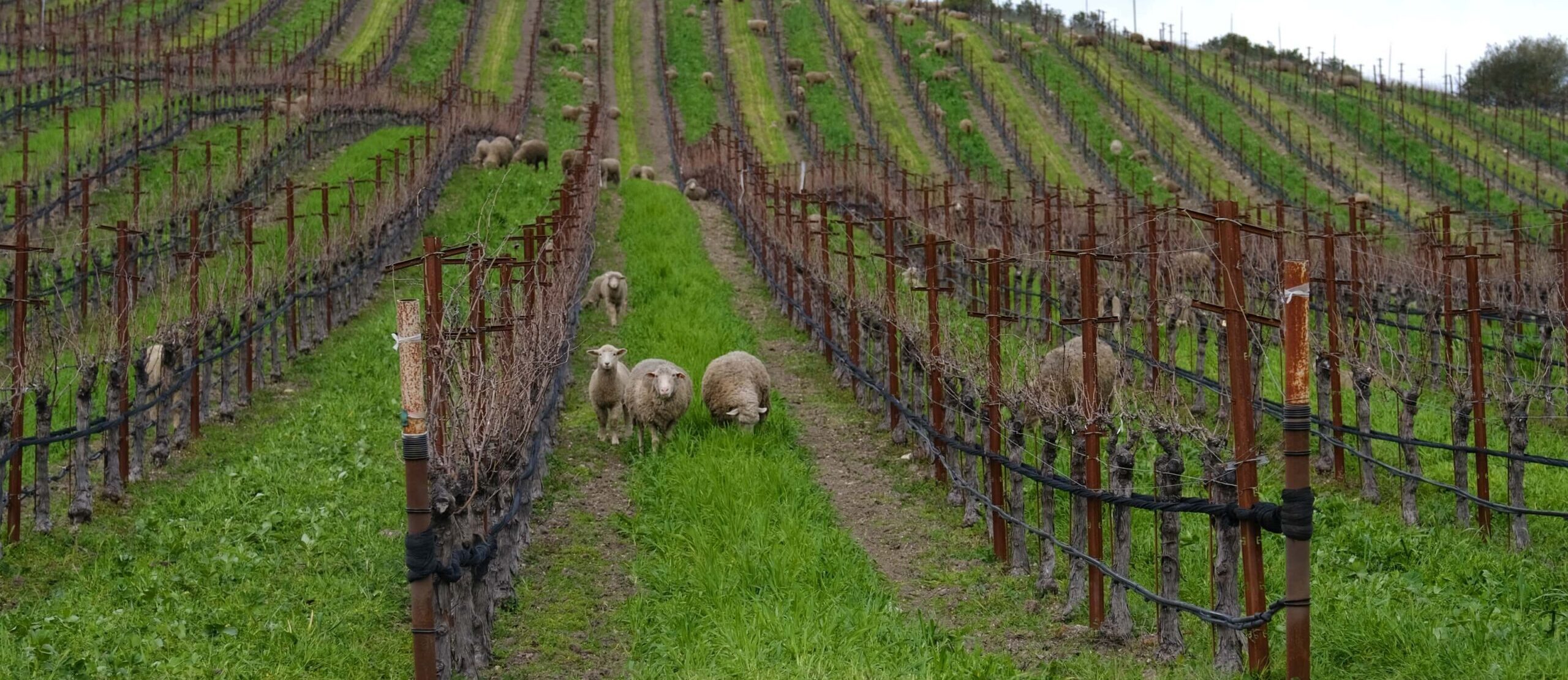
Winter is the time to build and protect our soil. We plant barley between some of the rows to prevent erosion and sequester carbon in their roots. In the other middles we plant peas and beans to capture nitrogen from the air and make natural fertilizer. During the dormant period this year we were visited by several hundred sheep at both the Heart Hill Vineyard and Jespersen Ranch. They were here to graze on the cover crops we planted in the fall.
We also brought in a herd of goats to graze in the fallow areas at Jespersen Ranch. This prevents the need for herbicides (we are herbicide-free) and reduces wildfire risk.
We pay a local shepherd to bring his flock to the vineyards. The sheep are moved from block to block to increase the density of the flock on the land. The benefits of rotational grazing include free mowing, fewer weeds, free fertilizer, improving the soil, and reducing our carbon footprint.
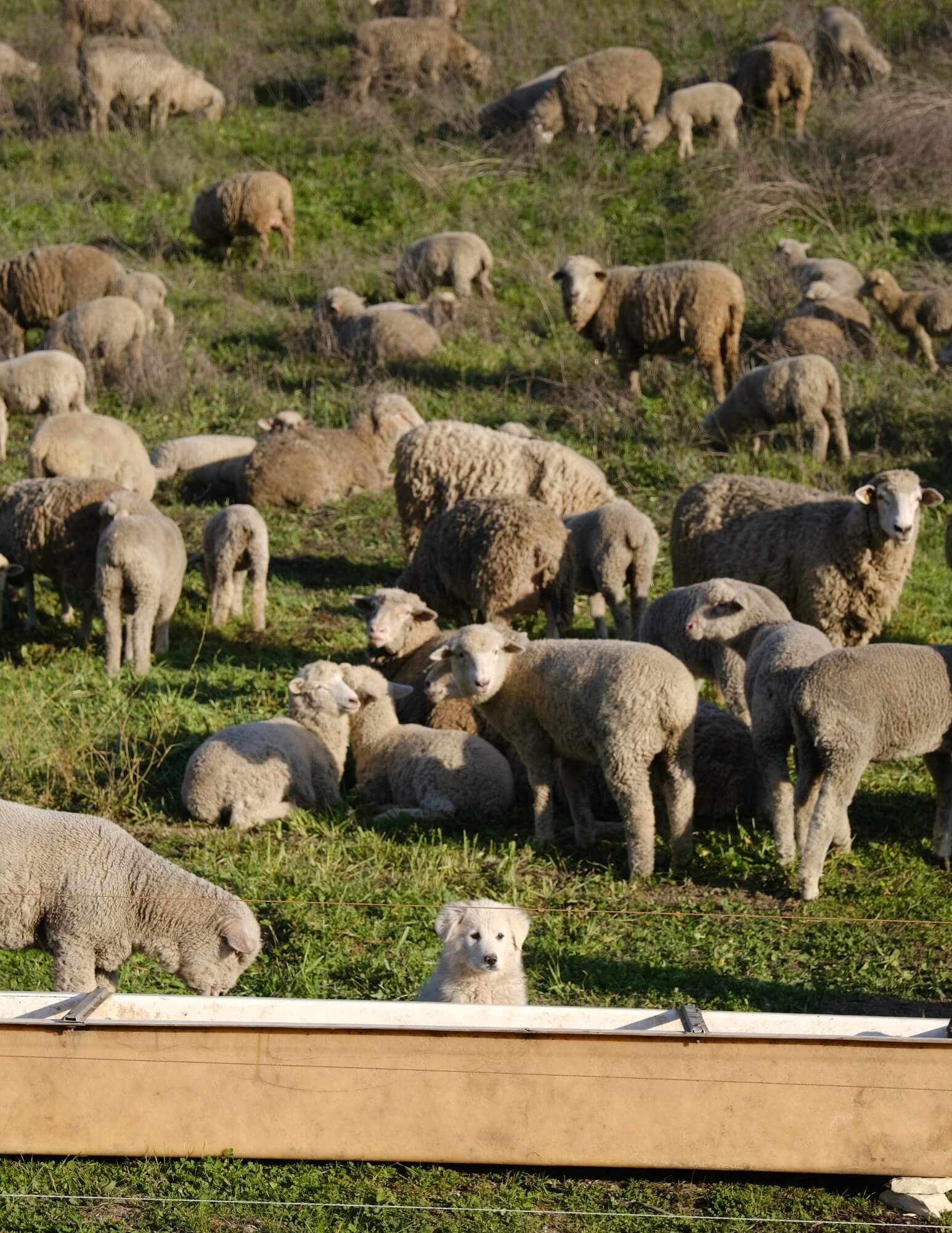 A Great Pyrenees puppy is learning to guard the herd along with two older dog mentors. This breed has strong guarding instincts and protects the flock from predators like coyotes during the night.
timing
The sheep come during the dormant season before the new shoots erupt in the spring. If there is new green growth sprouting from the vines, they will eat the new shoots reducing this year’s crop.
density
The flock is fenced into a small area. Raising the density of the sheep on the land enhances the uniformity of the “mowing” and increases the concentration of manure left behind. More manure equals more fertilizer. After a day or so the sheep are moved to a new area.
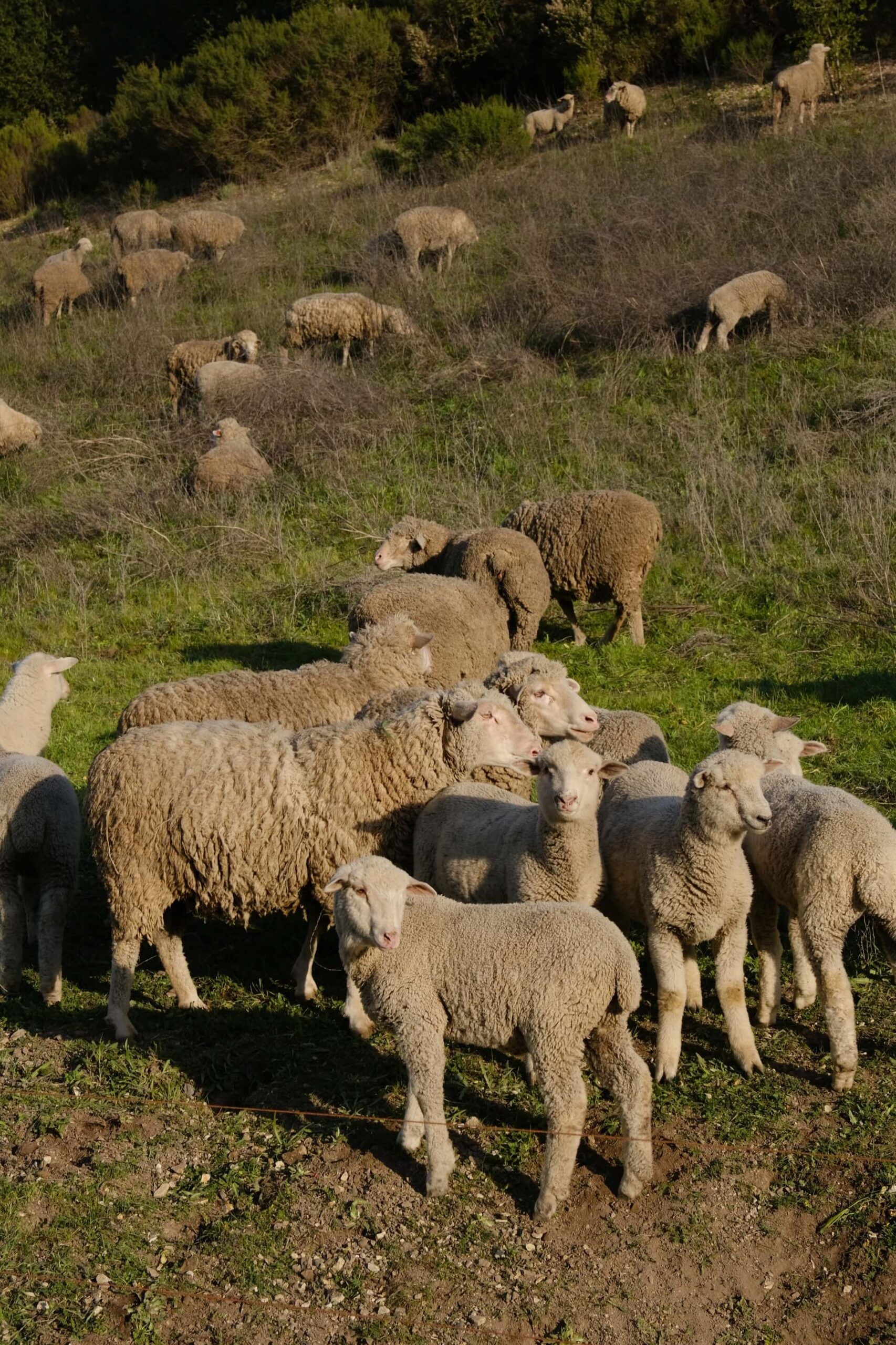 Every one–two days the herd is moved to a new area of the vineyard, increasing the concentration of manure (aka fertilizer) left behind.
Mowing and weeds
Grazing reduces the need for weeding and mowing, saving tractor trips down the rows. The sheep do an excellent job of cutting the cover crops short and eating weed seedlings before they become a nuisance.
Fertilizer
As the sheep graze, they leave behind manure and urine which are rich in nutrients. Sheep manure is a natural slow-release fertilizer. It is rich in nitrogen and organic matter.
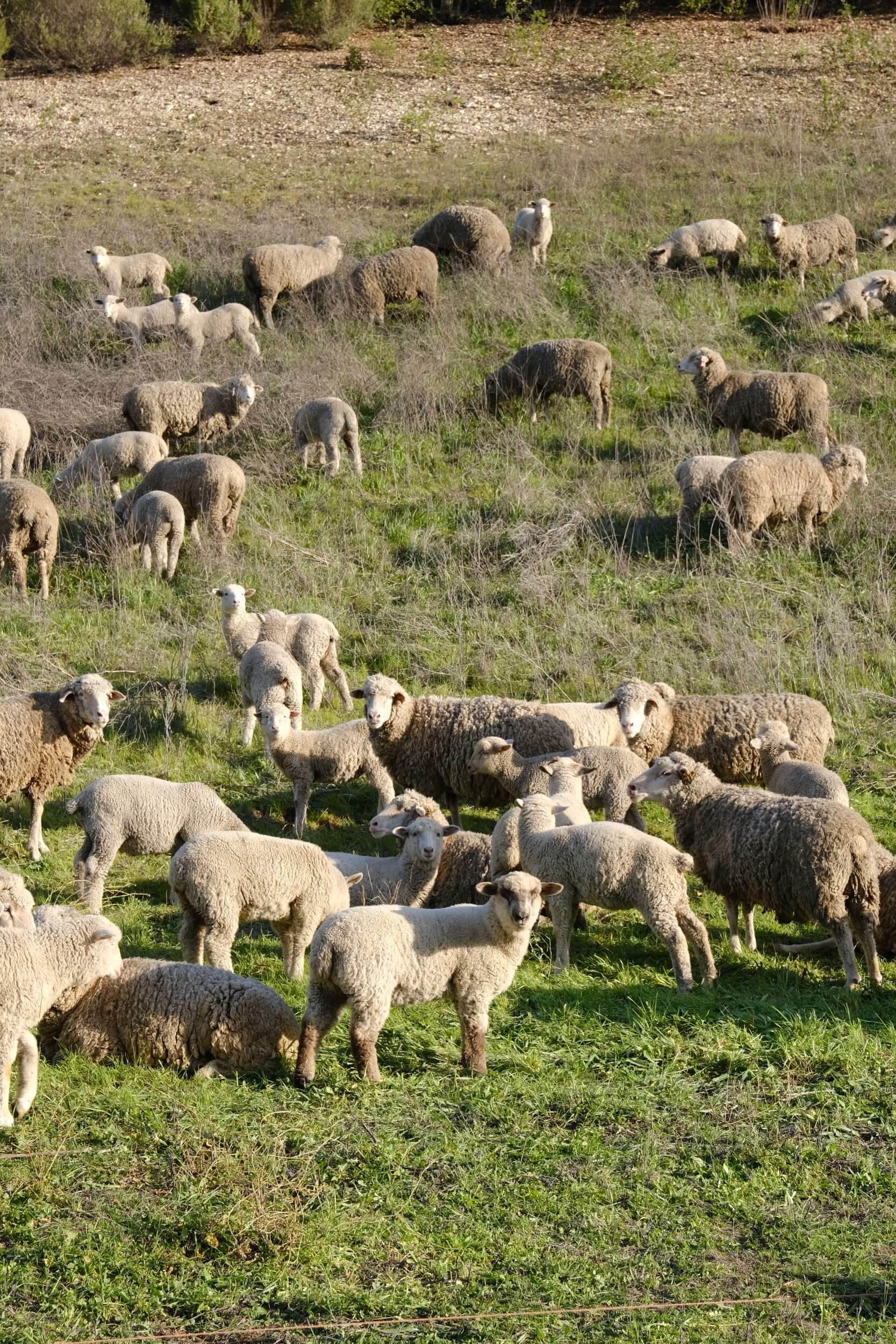 The early season rains this year created nearly perfect conditions to use sheep. Here they’re enjoying the ample grass growth.
Improving the soil
Grazing improves both the structure and life of the soil. Tractors compact the surface of the soil over the course of the season. Sheep break up the soil surface improving soil porosity, water infiltration, and nutrient cycling. Their gut bacteria provide food for beneficial soil microorganisms.
Carbon sequestration
When a plant is grazed, it sheds some roots. These roots decay giving carbon to the soil. The hooves of the animals push their carbon-rich manure into the ground. Here it breaks down more slowly than it would on the surface. This puts the carbon into the soil and not into the atmosphere.
Introducing animals into the vineyards is a winning strategy to achieve a variety of goals. We’re very pleased with our woolly friends and all they do to help us farm sustainably at Niner Wine Estates.
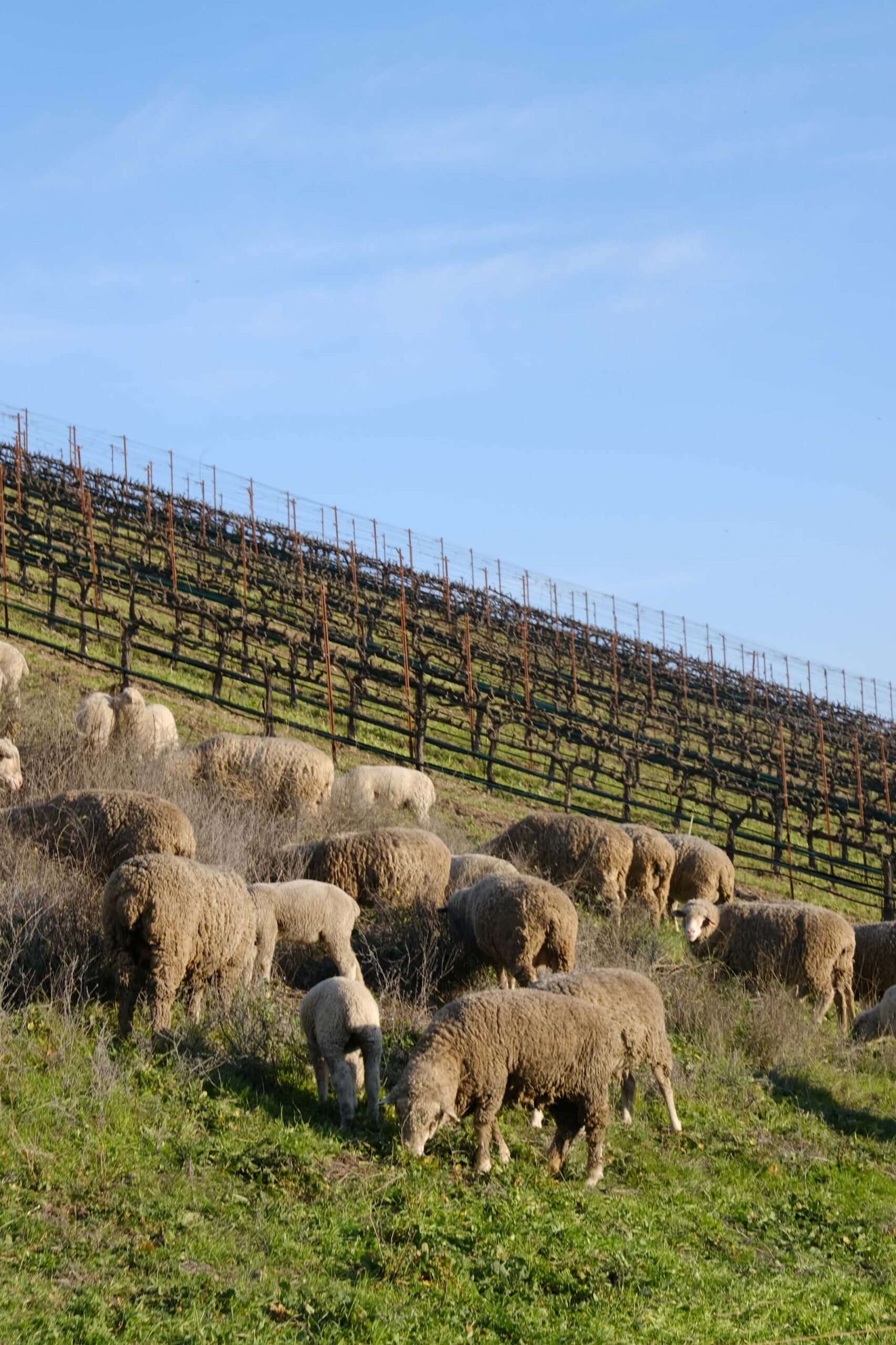 Sheep hooves are perfect for breaking up the soil surface improving soil porosity, water infiltration, and nutrient cycling.
About the author
Craig Macmillan is our Critical Resource Manager. He tracks our sustainability efforts, leads staff and public education and is the mastermind behind our private tour program. He holds three degrees: a B.S. in Philosophy, an M.S. in Plant Protection Science and a Ph.D. in Sociology. His extensive education is paired with thirty years of hands-on experience, including growing grapes, making wine, teaching, conducting research and podcasting. With this blog series we’re helping you learn from (truly) the best!