

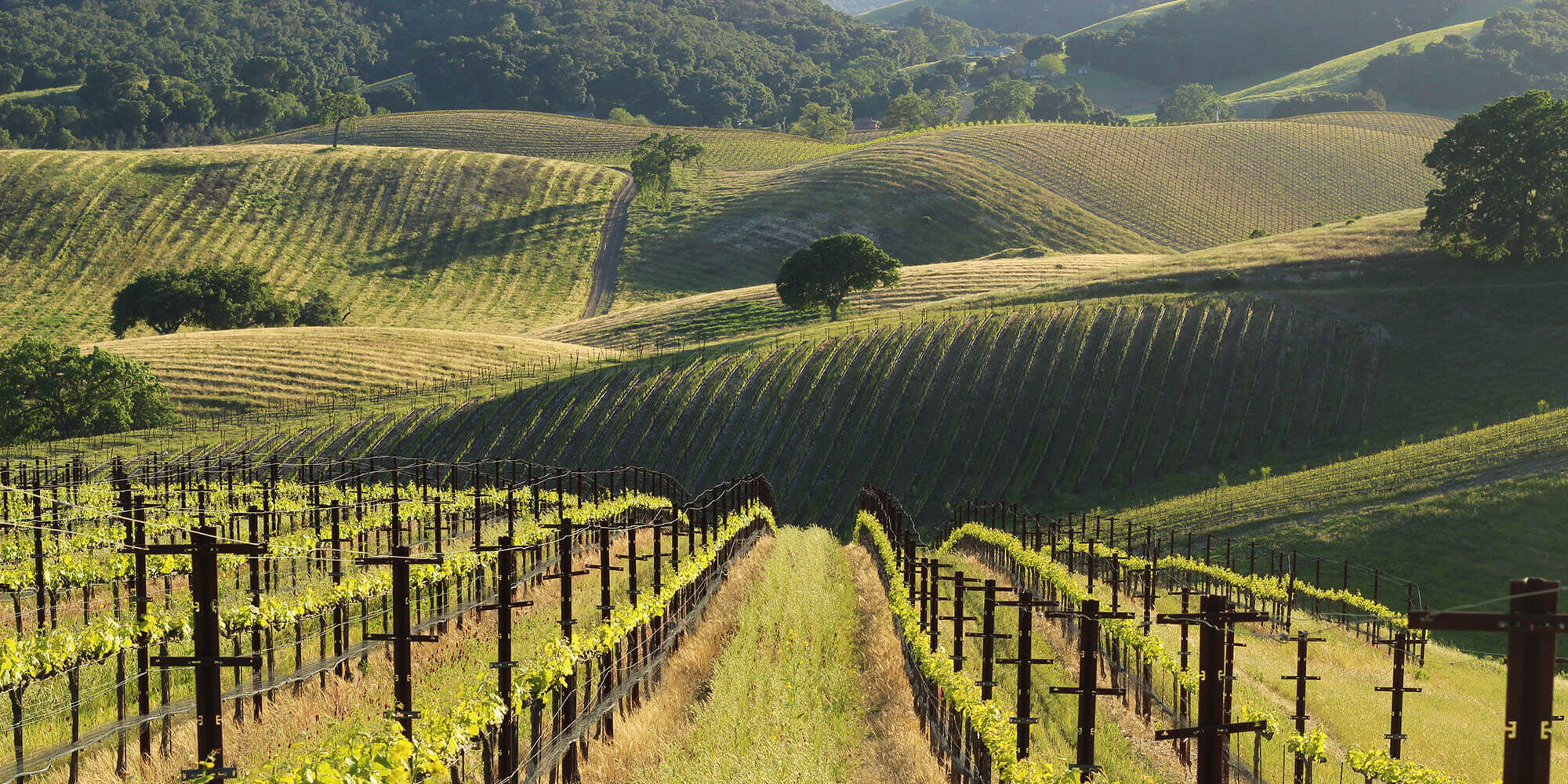
This month we are proud to share some of the practices we do to keep sustainability at the center of everything we do. From the carbon-sequestering cover crops between our vines to the renewable energy powering our cellar, every choice we make is designed to protect our local ecosystem. By integrating natural solutions like grazing sheep, biochar-enriched compost, and precision water reclamation, we ensure that every bottle reflects more than just fruit. It reflects clean air, vibrant biodiversity, and a healthier planet. Join us as we take a look behind the scenes at the regenerative practices that make our vineyards a sanctuary for the future.
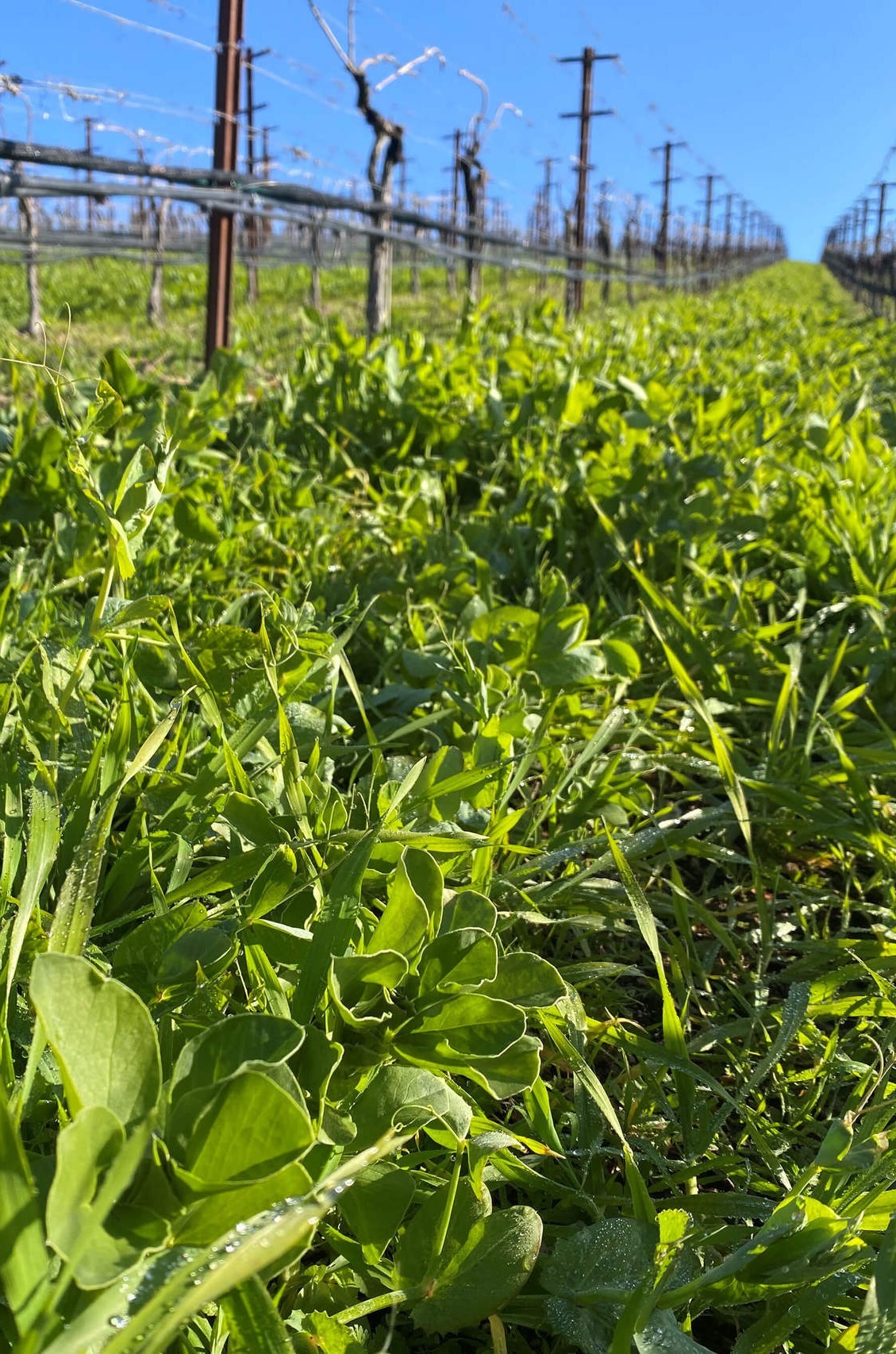
Beans, peas and barley grow between the rows to prevent erosion, and capture carbon from the atmosphere.
1. Cover cropping
In the fall we plant barley between the rows to capture carbon from the atmosphere and sequester it in the soil. The roots also prevent erosion. We plant peas and beans to take nitrogen from the air and turn it into natural fertilizer.
2. Sheep
Sheep graze on the cover covers in the late winter turning them into nutrients available to the vines during the growing season. This also saves tractor passes for mowing and weeding.
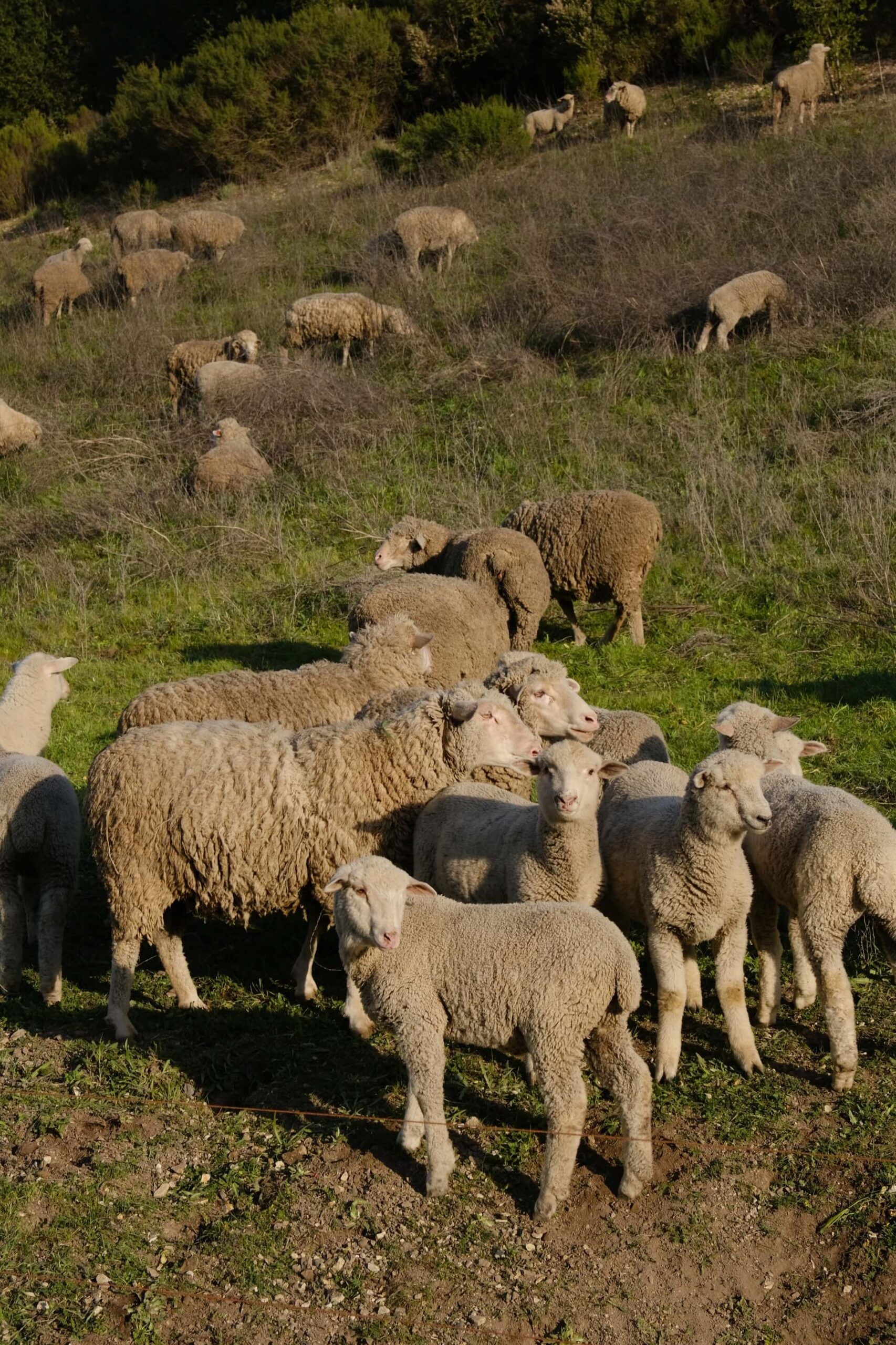 Every one–two days the herd is moved to a new area of the vineyard, increasing the concentration of manure (aka fertilizer) left behind.
3. Composting
We make our own compost from the skins and stems left over from wine production. We also compost material from the kitchen, garden, and landscaping. The goal is to keep these valuable resources on the farm and out of the landfill.
Winemaker Patrick Muran has taken composting one step further by incorporating Biochar into the mix: it’s a special type of charcoal made by breaking down woody material with heat, but not oxygen. We have been experimenting with blending biochar into our compost to sequester carbon, improve water retention in the soil, and provide a place for beneficial soil microorganisms to thrive.
4. herbicide-free
We do not use herbicides at either Heart Hill Vineyard or Jespersen Ranch. We believe this contributes to a healthier soil.
 No herbicides or harsh cleansers are used on our Estate, making this water clean and safe to put back into the soil.
5. Water reclamation
We capture and treat the winery process water, reusing it for irrigation rather than sending it into the septic system. The roofs of the buildings catch rainwater. The water from the roofs also goes into the irrigation system.
To go a step further, we make sure to use environmentally friendly cleaners in the winery. The cleansers we use are biodegradable, non-toxic, non-caustic solutions that clean our tanks while protecting the quality of the water we reuse for irrigation.
6. Precision drip irrigation
Drip irrigation delivers the water right where the plant needs it eliminating waste. Our irrigation system is actually a dual system. One irrigation line waters every plant. A second hose gives water only to the smaller vines. This way we are conserving water by not over watering the bigger vines.
7. Biodiversity
More than half of the ranch at Heart Hill is oak woodland and grassland. A diversity of plants and animals thrive in this habitat. A diverse ecosystem in and around the vineyards leads to a more stable and vibrant farm.
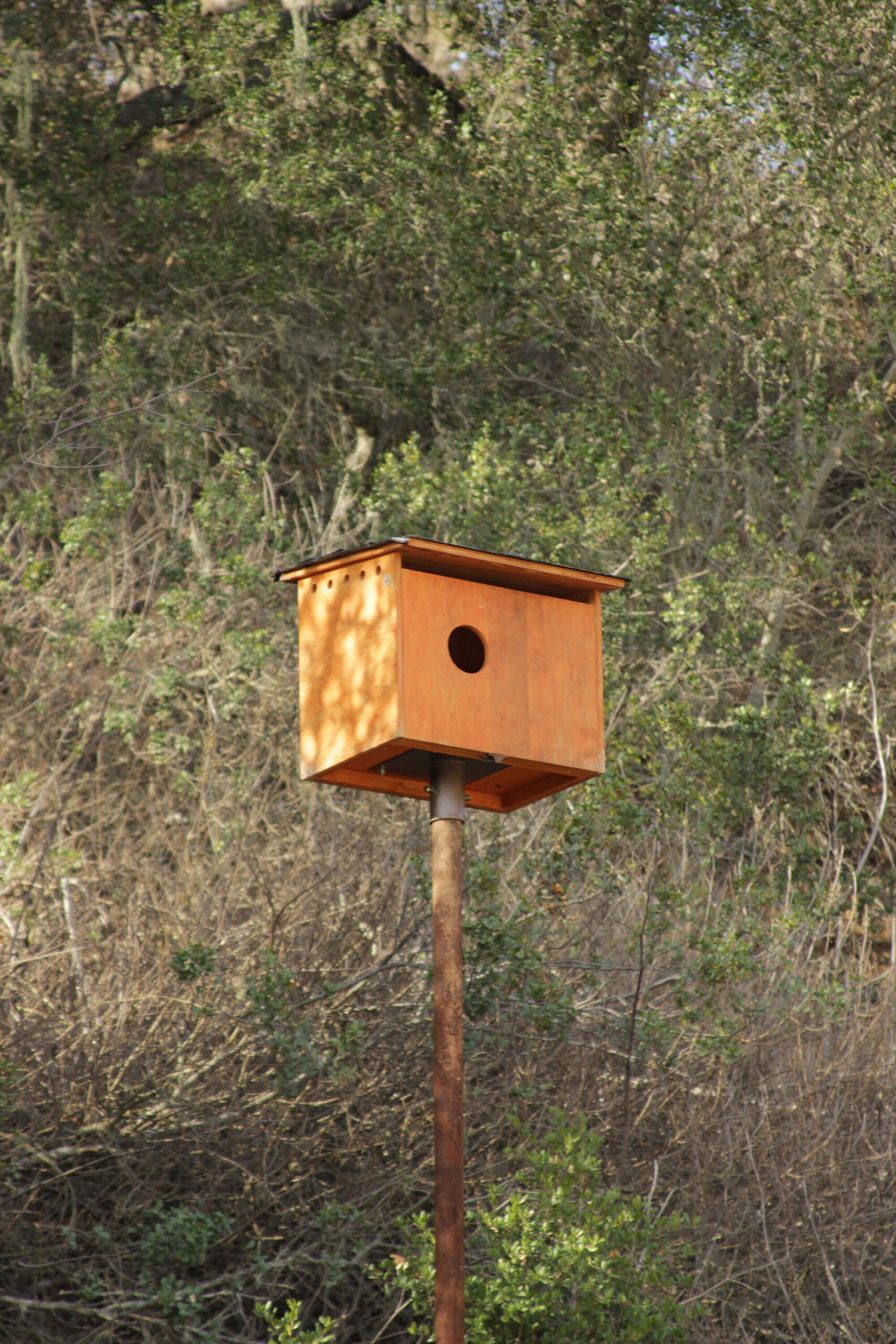 Owl boxes are placed around the vineyard, and they house the barn owls that keep our gophers and voles at bay.
8. Owl boxes & raptor perches
To manage rodents naturally, we’ve installed barn owl nesting boxes and raptor perches throughout both vineyards. A single family of owls will consume thousands of gophers and voles in a season!
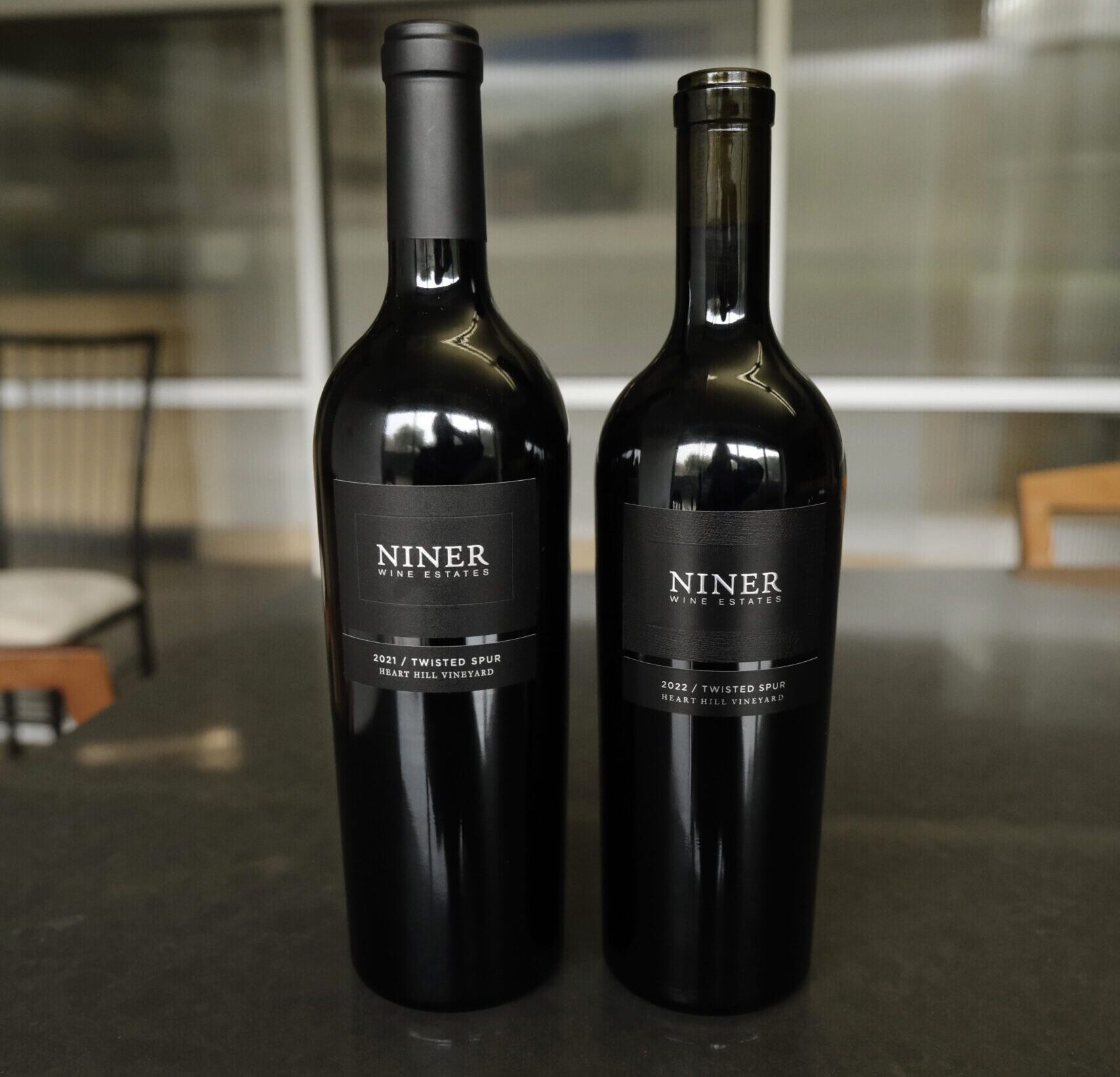 The bottle on the right is our new “topless” look. Removing the tin caps keeps over a ton of waste out of the landfill!
9. No more foils
We no longer use foil capsules on the bottles taking over a ton of tin out of the waste stream.
10. Renewable energy
We can meet over half of our electricity needs for the tasting room and winery from solar power. In addition to that, all our forklifts are powered by electricity, avoiding greenhouse gas emissions from traditional propane powered lifts.
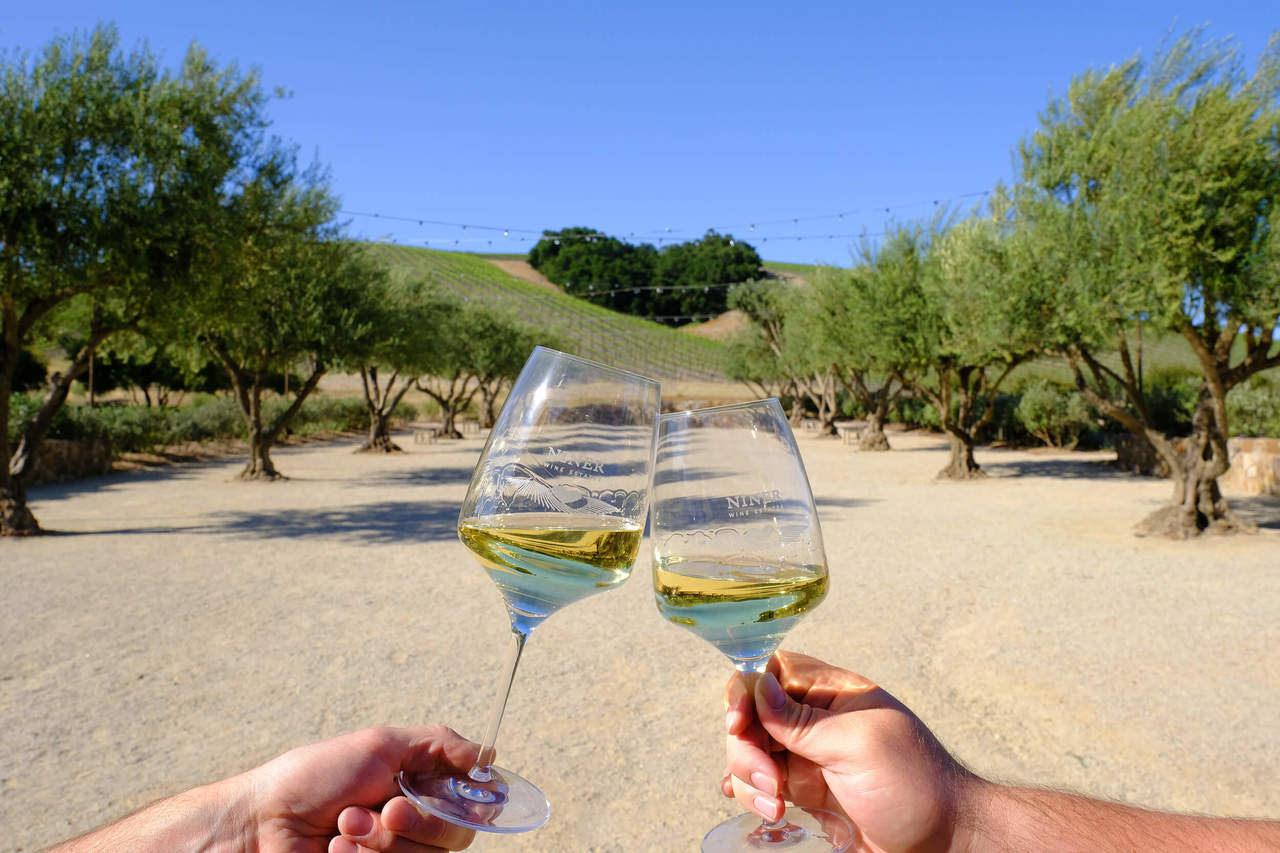
a toast to the future
When you swirl a glass of our wine, you’re tasting more than just fruit. You’re tasting clean air, healthy soil, and our commitment to protecting the Earth. On this Earth Day, we thank you for supporting vineyards that give the land the respect it deserves.
About the author
Craig Macmillan is our Critical Resource Manager. He tracks our sustainability efforts, leads staff and public education and is the mastermind behind our private tour program. He holds three degrees: a B.S. in Philosophy, an M.S. in Plant Protection Science and a Ph.D. in Sociology. His extensive education is paired with thirty years of hands-on experience, including growing grapes, making wine, teaching, conducting research and podcasting. With this blog series we’re helping you learn from (truly) the best!